



How a Sussex Castle Is Inspiring the Next Generation of Heritage Experts
As part of the continued expansion of our taster day programme, we were delighted to introduce two new heritage skills courses at Herstmonceux Castle this May. Designed to give students a hands-on introduction to traditional crafts and conservation careers, the courses provided a unique opportunity to learn valuable skills in one of Sussex’s most inspiring historic settings.

The new courses were developed by John Zielinski and Neil England and delivered by award-winning craftsperson John Zielinski. Created specifically for students from Chichester College, Brighton MET and Crawley College, the courses focused on endangered heritage skills that are becoming increasingly important as the sector works to preserve and maintain historic buildings.
The first taster day introduced students to ornamental plasterwork, while the second focused on sash window restoration. Both crafts play a crucial role in conserving the character and integrity of historic buildings across Sussex and beyond, making them valuable skills for the next generation of heritage professionals to explore.
Twelve students attended each course, taking part in practical activities that allowed them to experience these specialist crafts first-hand. The emphasis on hands-on learning encouraged students to develop new skills, ask questions and gain a better understanding of the opportunities available within the heritage sector.
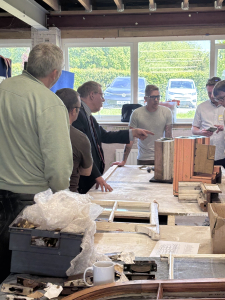
One of the highlights of the sash window restoration day was the involvement of renowned sash window expert Charles Brooking. Charles generously shared his knowledge and brought along a selection of exhibits from his museum collection, giving students the rare opportunity to examine historic examples up close and learn more about the development and significance of sash windows over time.
The setting of Herstmonceux Castle added another dimension to the experience. Students were given a tour of the castle, allowing them to see heritage conservation in context and appreciate how the skills they were learning are applied within historic buildings. For many, being able to connect practical learning with a real heritage environment made the experience particularly memorable.

The response from students was overwhelmingly positive. Many participants left feeling inspired and expressed an interest in pursuing further training or careers within the heritage sector. Their enthusiasm highlighted the value of providing accessible opportunities to explore traditional crafts and discover the diverse career pathways available within heritage conservation.
As our taster day programme continues to grow, these new courses demonstrate the impact that practical, engaging learning experiences can have. By introducing students to heritage skills such as ornamental plasterwork and sash window restoration, we hope to encourage more young people to consider a future in the sector and help ensure these important crafts continue to thrive for generations to come.


